


If you're anything like me (a tree peony supplier who's been geeking out over these stunning blooms for over a decade), building a tree peony garden isn't just about planting flowers-it's about crafting a space that feels like a secret, lush escape, with layers of color, texture, and even a little history woven into every corner. Tree peonies (Paeonia suffruticosa, for the plant nerds) are totally different from their herbaceous cousins; they have woody stems that stick around year-round, way bigger, r fuller blooms, and a vibe that says "I'm here to make a statement, not just fill a gap." But designing one that works for your yard, your budget, and gives you weeks of beauty instead of a single week of fireworks? That takes a little thought. Let's break down the design ideas that actually work, and throw in a few of our fan-favorite seedlings to make it easy.
First off, don't make the mistake of shoving all your tree peonies in one spot. I've seen so many gardens where people plant 10 different varieties in a straight row, and it looks like a discount flower rack at a grocery store. Tree peonies aren't meant to be mass-planted like that-they're focal points, not backdrop fillers. Instead, think in "layers" and "drifts." Start with the big picture: how much sun does your garden get? Tree peonies need at least 6 hours of full sun a day to bloom their best, but a little afternoon shade is fine if you live somewhere super hot (like the American Deep South or parts of China). If your yard has a few trees already, plant tree peonies near the base, but make sure their roots won't compete too bad-tree peonies have deep taproots, so don't stick them too close to oak or maple trees.
Now, let's talk about color flow. This is where I see so many people mess up: they pick 5 red peonies, 2 pink, 1 white, and just mix them, and it's overwhelming. Instead, go for a color palette that builds slowly. Early bloomers (April, depending on your zone) give you the first show, mid-season (May) is the big boom, late bloomers (early June) keep the party going. That means your garden won't be bare for a whole month after the first blooms fade. Our Tree Peony Juan Ye Hong is a perfect early mid-season pick-its deep, velvety red blooms with frilly edges pop before most pink peonies even wake up. Then, for mid-season, our Purple Peony Seedlings add that rich, moody contrast; not the bright purple that's hard to pair, but a muted, plumy purple that works with soft pinks and creamy whites. For late bloomers, Sun And Moon Brocade is showstopper-its petals blend soft pink edges with a creamy yellow center, so it ties all the earlier colors together and keeps the garden looking fresh when other plants are done.

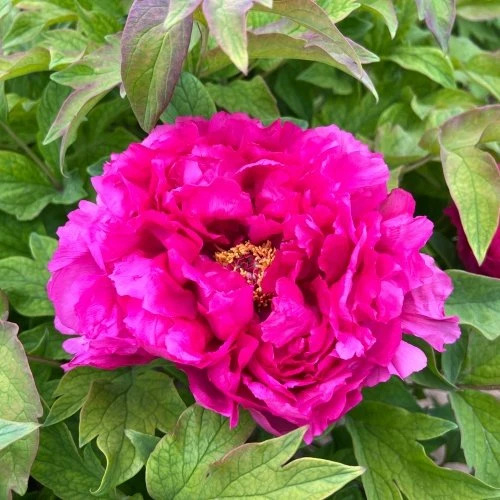
Wait, another tip: tree peony blooms are huge-some get 10 inches across-so they need room. Don't plant them closer than 3 to 5 feet apart, otherwise their foliage will crowd each other, and you won't get good air circulation (which means less fungal disease, more blooms). I like to plant smaller shrubs or perennials around the base of tree peonies to hide their "legs"-the woody lower stems that can look a little bare in winter. Hostas, for example, have big leaves that grow around the same time as peonies, so they cover up the lower part of the plant. Or lavender, if you like fragrant stuff-lavender blooms at the same time as mid-season peonies, so it adds another layer of scent (tree peonies have a mild, sweet scent, lavender is sharp and herbal, they play nice). If you want something with fall color, try ornamental grasses-miscanthus, for example, has golden plumes in late summer, and the leaves look great against the woody brown stems of the peonies in winter.
Now, if you're into Japanese-style gardens, don't sleep on Japanese Peony Seedlings. Japanese tree peonies have a more open, lanky bloom than the traditional Chinese ones (which are super full, almost like pom-poms). They're perfect for a more minimalist garden-plant one as a focal point near a stone path or a small water feature, and you don't need much else. Their blooms are delicate, so they don't feel overwhelming in a small space. I sold a set of Japanese peonies last month to a guy in Portland who built a tiny patio garden, and he put one right next to his fire pit-every time he sits out there, he says the bloom is the first thing people notice. And Cun Song Ying Peony is another great pick for smaller spaces; it's a dwarf variety, only grows about 3 feet tall, so it doesn't take over, but its blooms are still 6 inches across. Perfect for if you have a balcony or a small front yard that you want to turn into a little peony nook.
Another design trick: think about the garden as a year-round space, not just for bloom time. Tree peonies lose their leaves in winter, so you need something to look at when there are no flowers. Their woody stems are actually pretty cool-they have a gnarled, almost gray-brown texture, and as they get older, they develop these interesting shapes. Plant them so that when the leaves drop, their stems are visible-maybe near a fence or a bare wall, so they cast a nice shadow in winter. Also, if you mix in a few evergreen shrubs (like boxwood or mountain laurel), they'll contrast with the bare peony stems and keep the garden from looking too stark in January. I have a customer in Boston who planted a dwarf boxwood hedge around her peony garden, and in winter, it looks like a little frame for the peony stems-she says it's her favorite part of the garden, even when there are no blooms.
Wait, let's talk about what to avoid. Don't plant tree peonies too deep! Their buds need to be just below the soil surface (about 1 inch deep) to bloom-if you plant them too deep, they'll grow lots of stems but no flowers. That's a super common mistake, especially for new gardeners. Also, don't over-fertilize them in the spring-they don't need a lot of nitrogen, which makes them grow leaves instead of blooms. A light application of bone meal in the fall is all they need. Oh, and don't cut back their woody stems in winter-those are the ones that produce blooms the next year. Herbaceous peonies get cut back to the ground, but tree peonies keep their stems, so just remove any dead or damaged ones in late winter.
If you're building a larger garden-like a whole corner of your yard that's 10x15 feet-think about grouping varieties by bloom time, but also by color. Early bloomers on the north side of the garden (they're a little more shade-tolerant), mid-season in the center (full sun), late bloomers on the south side (so they get the last of the sun). That way, the color moves around the garden as the season goes on. I helped a customer in Atlanta design a 12x18 peony garden last year-we planted 6 varieties: 2 early, 2 mid, 2 late. She said when her friends came over in May, they didn't believe it was the same garden as it was in April. That's the magic of it-you get a rotating show, not a one-night stand.
Now, let's talk about sourcing. As a tree peony supplier, I've tested all these varieties for 10+ years, so I know which ones actually perform well. The ones I mentioned earlier-Juan Ye Hong, Purple Peony Seedlings, Japanese Peony Seedlings, Cun Song Ying Peony, Sun And Moon Brocade-all grow well in zones 4 to 8 (most parts of the US, except the super cold north or super hot south), and they're disease-resistant, so you don't have to worry about spending all summer spraying fungicide. We ship bare-root peonies in late fall and early winter, which is the best time to plant them (their roots get established before spring growth). If you're not sure which variety is right for your space, just reach out-we can help you pick based on your zone, sun exposure, and garden size.
Whether you're a seasoned gardener or just starting out, a tree peony garden is such a rewarding project. It's not just about pretty flowers-its about having a space that you can look forward to all year, that changes with the seasons, and that makes your yard feel like a little piece of magic. If you're ready to get started with your tree peony garden and want to talk through what varieties will work best for your space, don't hesitate to connect with us to discuss purchasing and planting details.


