


Your Professional Herbaceous Peony Supplier
Heze Zhongxin International Economic and Trade Co., Ltd. is a comprehensive production enterprise primarily engaged in the processing and export of herbaceous peony and tree peony. The company possesses advanced cultivation technology, integrating planting, processing, exporting, and after-sales services with state-of-the-art equipment. Additionally, we supply various types of garden tools and horticultural equipment manufactured in China, offering competitive pricing and superior quality.
Production Equipment
The company is equipped with 10 sets of cleaning equipment, 4 sets of automatic packaging equipment, 12 sets of automatic cooling equipment, and 2 automatic seedling processing lines.
Sales Market
Our products are exported to more than ten countries, including the Netherlands, Russia, Japan, Germany, the United States, France, the United Kingdom, Chile, Italy, and South Korea.
Quality Assurance
We provide a 100% quality guarantee to our customers and assume full responsibility for any quality-related issues.
Production Capacity
Annually, the company supplies approximately 3,000,000 units of various seedlings and 100,000 units of different horticultural products to meet customer demand.
-
!['Ling Hua Chen Yu' Peony]() 'Ling Hua Chen Yu' PeonyFlower color: Pinkish-blueFlower diameter: 13 × 7 cmPlant height: Up to 90 cmCompound leaf size: Approximately 32 × 26 cmNumber of flowers per plant: Approximately 13Fragrance: Strong fragranceread more
'Ling Hua Chen Yu' PeonyFlower color: Pinkish-blueFlower diameter: 13 × 7 cmPlant height: Up to 90 cmCompound leaf size: Approximately 32 × 26 cmNumber of flowers per plant: Approximately 13Fragrance: Strong fragranceread more -
![Monsieur Jules Elie Peony]() Monsieur Jules Elie PeonyVariety Name: Fuji Propagation Method: DivisionSeedling Type: Bare-root seedlingsRoot System Specifications: Storage root length ≥15cm, with at least 2 main nutrient rootsFlowering Period: Early-flowering varietyMature Plant Height:read more
Monsieur Jules Elie PeonyVariety Name: Fuji Propagation Method: DivisionSeedling Type: Bare-root seedlingsRoot System Specifications: Storage root length ≥15cm, with at least 2 main nutrient rootsFlowering Period: Early-flowering varietyMature Plant Height:read more -
![Peony Colonel Owen Cousins]() Peony Colonel Owen CousinsChinese Name: Colonel OwensEnglish Name: Peony Colonel Owens CousinsGenus: HybridFlowering Period: Early to Mid-seasonFlower Size: AAA+Fragrance: Light fragranceBud Stage: Warm pink, later turns completely white.Flower Shape: Very similarread more
Peony Colonel Owen CousinsChinese Name: Colonel OwensEnglish Name: Peony Colonel Owens CousinsGenus: HybridFlowering Period: Early to Mid-seasonFlower Size: AAA+Fragrance: Light fragranceBud Stage: Warm pink, later turns completely white.Flower Shape: Very similarread more -
![Suffruticosa 'Yue Gong Zhu Guang']() Suffruticosa 'Yue Gong Zhu Guang'Family: PaeoniaceaeGenus: PaeoniaScientific Name: Paeonia × suffruticosa 'Yue Gong Zhu Guang'Flower Color: WhiteFlower Shape: Light and delicate, like a closed flowerread more
Suffruticosa 'Yue Gong Zhu Guang'Family: PaeoniaceaeGenus: PaeoniaScientific Name: Paeonia × suffruticosa 'Yue Gong Zhu Guang'Flower Color: WhiteFlower Shape: Light and delicate, like a closed flowerread more -
![European Peony Seedlings]() European Peony SeedlingsEuropean peony seedlings are renowned for their unique appearance and rich colors, each with its own charm and characteristics.European peony seedlings have strong growth, thick branches, large flowers, high flowering rate, and very highread more
European Peony SeedlingsEuropean peony seedlings are renowned for their unique appearance and rich colors, each with its own charm and characteristics.European peony seedlings have strong growth, thick branches, large flowers, high flowering rate, and very highread more -
![Herb Peony Seedlings]() Herb Peony SeedlingsHerbaceous peony Latin name: Paeonia lactiflora Pall. It is a perennial herbaceous plant in the Paeoniaceae family, and the flowering period from end of April to end of May.read more
Herb Peony SeedlingsHerbaceous peony Latin name: Paeonia lactiflora Pall. It is a perennial herbaceous plant in the Paeoniaceae family, and the flowering period from end of April to end of May.read more


Parameter
|
Grafted or divided seeding |
|
|
2-3 buds or 3-5 buds. |
|
|
Roots thickness |
1-3cm |
|
Roots length |
15-20cm |
Advantages of Herbaceous Peony
Showy Flowers
Herbaceous peonies are known for their large, showy, and fragrant blooms, available in various colors like pink, red, white, and yellow.
Diverse Flower Forms
They exhibit a range of flower forms, including single, semi-double, double, Japanese, and bomb, offering diverse visual appeal.
Attractive Foliage
Their foliage remains attractive throughout the growing season, turning red in the fall, adding to their ornamental value.
Versatile in the Garden
Herbaceous peonies can be used in borders, cut flower arrangements, and as focal points in the landscape.

Precautions for Planting Herbaceous Peony
Choose the right location
Peonies that are sited well can survive and bloom generously for decades with minimal care. When planting your herbaceous peony, choose a location in full sun, with at least six hours of direct sun (not just sunny, the sun must be visible in the sky from the site) each day, to ensure vigorous blooms. Have your soil tested for pH by your county's cooperative extension office to see if amendments are needed to raise the pH to the 6.5 to 7 target zone.
Plant in the fall
Plant bare root herbaceous peonies in fall, not spring, as the falling temperatures of autumn trigger the initiation of root growth. Spring planting for bare root plants has a low likelihood of success but container-grown plants can be introduced to the garden in spring with care taken that the roots are not damaged.
Allow generous space
In a few years, your peony will become a large, green, perennial bush. Most diseases affecting peonies, both fungal and viral, are encouraged by poor air flow around the plant and leaves that dry slowly, so allow a space of about 3 - 4 feet for good air circulation between your peony and other permanent plantings and structures.
Prepare the soil
Keep the peony roots shaded and slightly moist until planting. Herbaceous peonies prefer a humus-rich, well-drained soil with a pH of 6.5 - 7.0. Organic compost and calcitic lime are two amendments that are useful to most soils, to increase fertility, improve texture, raise pH and add calcium.
Don't plant too deeply
Herbaceous peonies have fleshy tuberous roots with buds (sometimes called eyes) that are planted "buds up", with those buds no more than 2 inches below ground level. Check that the plant does not sink as you water it in.
Herbaceous Peony Flower Color
● White, Blush and Pink are all typically very fragrant
● Magenta is often referred to as red in peony culture but actually ranges from very dark pink to purple-red and does not include true red cultivars
● Merlot red peonies are occasionally classified as Black, these are the darkest peonies
● Multi colored peonies have a combination of two or more distinct colors. Typically the alternate color is yellow but it is occasionally white.
● Green peonies are less common
● Yellow herbaceous peonies are uncommon. They tend to be weak and slow growing. Strong yellows exist in intersectional and tree peonies. Cream colored peonies are often classified as yellow but are not actually yellow in color
● True Red only exists in the herbaceous peony hybrids, created by crossing a different parent species
● Coral only exists in the herbaceous peony hybrids, created by crossing a different parent species. They often fade to cream as they open. Tend to have strong stems
Packaging and Shipping
|
Packaging |
Bare root in cartons with moisture material protect |
|
Shipping |
Air and sea transport |
● Our sale department will introduce the products which you are interested in very carefully before you make your order.
● Our factory will produce your order with the best quality, and our logistic department will arrange the best transportation and provide all the needed documents for you to check and confirm before delivery.
● After you received the shipment and checked all the goods, our sale department will contact you and solve all the possible problem in timely.

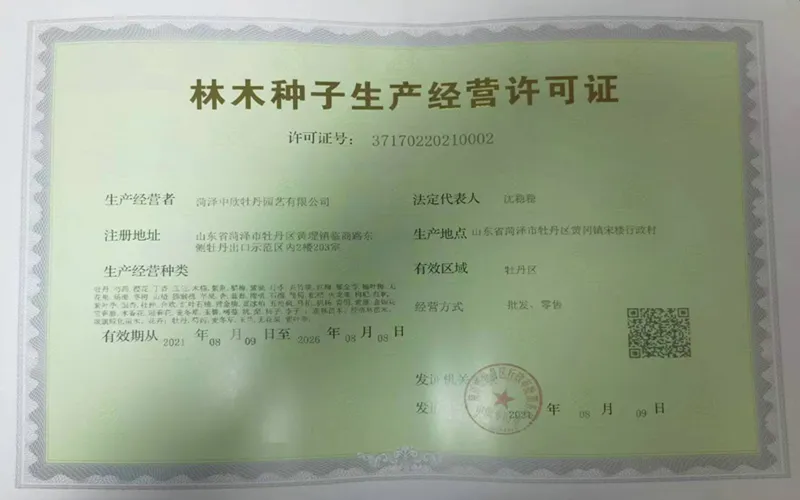
Our Certificate

FAQ
As one of the most professional herbaceous peony manufacturers and suppliers in China, we're featured by quality products and good service. Please rest assured to wholesale herbaceous peony at competitive price from our factory.
herbaceous peony, European Peony Seedlings-
![Cutting Fresh Peonies]() Cutting Fresh PeoniesProducts Description Peony, also known as the "Prime Minister of Flowers," possesses an inherently gentle andread more
Cutting Fresh PeoniesProducts Description Peony, also known as the "Prime Minister of Flowers," possesses an inherently gentle andread more -
![Peony Cut Flowers]() Peony Cut FlowersProducts Description Product Core Parameters Double-flowered Pink Peony (Sarah Bernhardt): Flower stem length 50-70cm,read more
Peony Cut FlowersProducts Description Product Core Parameters Double-flowered Pink Peony (Sarah Bernhardt): Flower stem length 50-70cm,read more -
![Tree Peony Juan Ye Hong]() Tree Peony Juan Ye HongModel: ZX-FW1-red8Root Length: 20cm-25cmFlower Color: RedCertificates: Certificate of Origin, Phytosanitaryread more
Tree Peony Juan Ye HongModel: ZX-FW1-red8Root Length: 20cm-25cmFlower Color: RedCertificates: Certificate of Origin, Phytosanitaryread more -
![Tree Peony Yu Hou Feng Guang]() Tree Peony Yu Hou Feng GuangRoot length: 20cm-25cmFlower color: Pinkish-blueCertificates: Certificate of Origin, Phytosanitary CertificateShippingread more
Tree Peony Yu Hou Feng GuangRoot length: 20cm-25cmFlower color: Pinkish-blueCertificates: Certificate of Origin, Phytosanitary CertificateShippingread more -
!['Ling Hua Chen Yu' Peony]() 'Ling Hua Chen Yu' PeonyFlower color: Pinkish-blueFlower diameter: 13 × 7 cmPlant height: Up to 90 cmCompound leaf size: Approximately 32 × 26read more
'Ling Hua Chen Yu' PeonyFlower color: Pinkish-blueFlower diameter: 13 × 7 cmPlant height: Up to 90 cmCompound leaf size: Approximately 32 × 26read more -
![Monsieur Jules Elie Peony]() Monsieur Jules Elie PeonyVariety Name: Fuji Propagation Method: DivisionSeedling Type: Bare-root seedlingsRoot System Specifications: Storageread more
Monsieur Jules Elie PeonyVariety Name: Fuji Propagation Method: DivisionSeedling Type: Bare-root seedlingsRoot System Specifications: Storageread more


