


Your Professional Plywood Supplier
Heze Zhongxin International Economic and Trade Co., Ltd. is a comprehensive production enterprise primarily engaged in the processing and export of herbaceous peony and tree peony. The company possesses advanced cultivation technology, integrating planting, processing, exporting, and after-sales services with state-of-the-art equipment. Additionally, we supply various types of garden tools and horticultural equipment manufactured in China, offering competitive pricing and superior quality.
Production Equipment
The company is equipped with 10 sets of cleaning equipment, 4 sets of automatic packaging equipment, 12 sets of automatic cooling equipment, and 2 automatic seedling processing lines.
Sales Market
Our products are exported to more than ten countries, including the Netherlands, Russia, Japan, Germany, the United States, France, the United Kingdom, Chile, Italy, and South Korea.
Quality Assurance
We provide a 100% quality guarantee to our customers and assume full responsibility for any quality-related issues.
Production Capacity
Annually, the company supplies approximately 3,000,000 units of various seedlings and 100,000 units of different horticultural products to meet customer demand.
-
![Wooden Veneer Plywood]() Wooden Veneer PlywoodHello dear buyer friend. This product is wood veneer plywood. Plywood is a type of board made of thin wooden boards or thin sheet materials glued together, with good mechanical properties and...read more
Wooden Veneer PlywoodHello dear buyer friend. This product is wood veneer plywood. Plywood is a type of board made of thin wooden boards or thin sheet materials glued together, with good mechanical properties and...read more -
![Flame Retardant Plywood]() Flame Retardant PlywoodFlame retardant plywood is treated with flame retardants on solid wood or integrated materials, and its fire rating can reach B1 level internationally, which can effectively prevent fire accidents.read more
Flame Retardant PlywoodFlame retardant plywood is treated with flame retardants on solid wood or integrated materials, and its fire rating can reach B1 level internationally, which can effectively prevent fire accidents.read more -
![Basswood Plywood]() Basswood PlywoodWe specialize in producing and selling various types of boards, providing you with one-stop services including wholesale and customized processing of boards. Dear buyer friend, this product is...read more
Basswood PlywoodWe specialize in producing and selling various types of boards, providing you with one-stop services including wholesale and customized processing of boards. Dear buyer friend, this product is...read more


Parameter
|
Product Name |
Commercial Plywood,Ordinary Plywood |
|
Size |
1220*2440mm or other size as per customer's request |
|
Thickness |
2-25mm |
|
Material |
Poplar or pine |
|
Face/Back |
Okoume,Bintangor,Pine,Pencil Cedar,PLB,Bleached Poplar,Hardwood,Birch,etc. |
|
Core |
Poplar,Combi.,Hardwood,Finger Joint,ect. |
|
Glue |
E0,E1,E2,MR and WBP |
|
Grade |
BB/BB,BB/CC |
|
Moisture Content |
8%~14% |
Types of Plywood
The plywood produced by our company mainly include the following types:

Wooden Veneer Plywood
This product is wood veneer plywood. Plywood is a type of board made of thin wooden boards or thin sheet materials glued together, with good mechanical properties and plane stability.

Flame Retardant Plywood
Flame retardant plywood is treated with flame retardants on solid wood or integrated materials, and its fire rating can reach B1 level internationally, which can effectively prevent fire accidents.

Limewood Plywood
Limewood plywood has excellent structural stability, and its shape will not undergo significant changes and is not easily deformed under different temperature and humidity conditions.
Advantages of Plywood
Strength and Stability
Plywood is known for its strength and stability, making it an excellent choice for structural applications. Its construction, consisting of multiple layers of wood veneers glued together with the grain direction alternating, creates a strong and stable panel.
Cost-Effectiveness
Plywood is a cost-effective building material compared to alternatives such as solid wood or engineered wood products. Its manufacturing process optimizes the use of wood resources, making it more affordable while still maintaining structural integrity.
Versatility and Customization
Plywood offers remarkable versatility in terms of applications and customization options. It can be easily cut, shaped, and formed into various sizes and designs to fit specific project requirements. Plywood panels come in different thicknesses, grades, and finishes, allowing for flexibility in adapting to different construction needs.
Wide Availability
Plywood is widely available and accessible in the construction market. It can be found in local lumberyards, home improvement stores, and online suppliers. This availability ensures that you can easily source plywood for your project without significant delays or supply chain issues.
Environmental Sustainability
Plywood can be an environmentally friendly choice, especially when sourced from sustainably managed forests. Responsible plywood manufacturers follow strict guidelines to ensure the sustainability of wood resources.
Resistance to Moisture and Weather
Plywood can be manufactured with specific treatments and coatings that enhance its resistance to moisture, weather, and insect damage. This makes it suitable for both interior and exterior applications, such as flooring, sheathing, roofing, and subflooring.
Exterior walls
One of the most common uses for plywood is exterior walls. Because exterior walls go up against the elements, it’s essential to use plywood designed for outdoor use. It’s no surprise, then, to learn that exterior plywood is the type that is used for building walls.
Interior walls
As well as exterior walls, plywood is also commonly used for interior walls due to its strength and flexibility. This makes it great for use as panels or framing of the interior walls, as a plywood panel can be used to provide an extra bit of structural integrity to the inside of the house.
Furniture
Furniture is commonly made out of plywood for a variety of reasons, including both indoor and outdoor furniture. Hardwood plywood is used when building furniture, including anything from desks, wardrobes, cabinets, chests of drawers and many other common types of furniture that can be found inside the house.
Flooring
Plywood is excellent for structural applications and one of its best uses for flooring and roofing. Plywood sheathing is commonly used for permanent fixtures that need structurally sound designs, making this type of wood very popular for floors, roofing and walls.
Roofing
Exterior plywood is particularly well-suited for roofing applications, as it provides good protection against weather damage while being relatively inexpensive. In addition, plywood is less likely than solid wood to warp or crack over time, making it a more reliable material for use in roofing.
Plywood Production Steps
Log preparation
Once trees are cut down, the timber is processed to create usable pieces for veneer production. These logs are typically cut into large blocks.
Veneer creation
To soften the wood and facilitate thin slicing, the timber blocks undergo an extended soaking process. Once sufficiently softened, the blocks are fed into a lathe or peeling machine. This machine spins the log against a sharp blade, resulting in thin, continuous sheets of wood veneer.
Preparing the veneers
The veneers are carefully dried to a specific moisture content to ensure proper bonding. Any imperfections are addressed through patching to create a smooth and consistent surface.
Gluing and pressing
The next stage involves applying adhesives specifically chosen based on the intended use of the plywood. For instance, marine-grade plywood requires moisture-resistant glue. These glued veneers are then strategically stacked with alternating grain directions.
Finishing touches
Once pressed, the plywood panels are cooled and sanded smooth. They are then sized to various dimensions to cater to different project requirements.
Precautions for Using Plywood
Cutting plywood can be challenging due to its tendency to splinter along the edges. To minimize this, use fine-tooth saw blades or a sharp blade designed for plywood. Circular saws and table saws are commonly used. Make sure you cut with the good side facing down when using a circular saw and facing up when using a table saw.
Plywood should be stored flat to prevent warping. If storing vertically, ensure it is well-supported and doesn’t lean at an angle that could cause it to bend. Avoid exposure to moisture, as plywood can absorb water and swell or delaminate. If working in a humid environment, seal the edges and surfaces with a primer or paint to prevent moisture penetration.
When fixing plywood it’s important to use the right type, whether you are using screws, nails, or glue. Screws specifically designed for wood are best for plywood because they provide better holding power without splitting the layers. Pre-drilling holes can help prevent splitting, especially near the edges.
Plywood edges are often rough and expose the layers of veneer, which can be unsightly. For a polished look, consider edge banding—a thin strip of wood or veneer that adheres to the edge of the plywood. Iron-on edge banding is an easy and effective solution. Alternatively, you can apply a solid wood trim to the edges, which can be glued and nailed in place for a more robust finish.
Ordering Process
Tell us what item and how many you want.
1
>>
Make an pro-invoice as your request.
2
>>
Agree on the payment, shipment and so on.
3
>>
Do the payment or deposit.
4
>>
Shipping the goods.
5
>>
After-sale service.
6
Packaging and Shipping
|
Packaging |
1.Wooden pallet on the bottom of bulk 2.Corner protection 3.Wrapping film for bulk 4.Packing belts |
|
Shipping |
Air and sea transport |
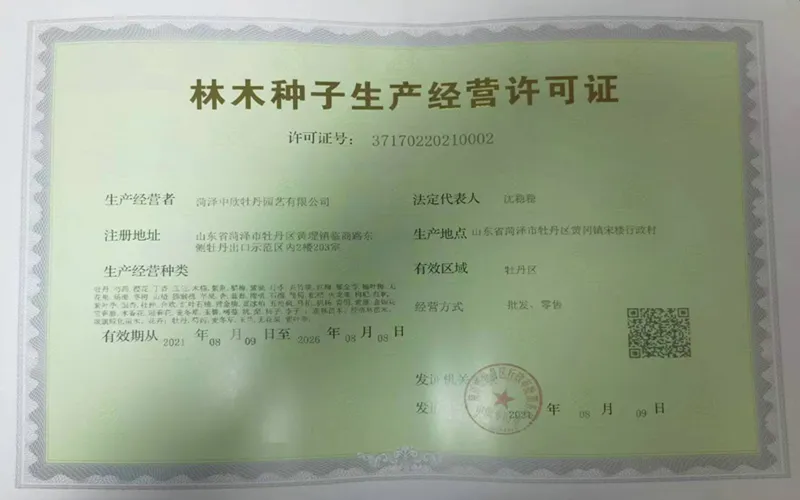
Our Certificate

FAQ
As one of the most professional plywood manufacturers and suppliers in China, we're featured by quality products and good service. Please rest assured to wholesale plywood at competitive price from our factory.
plywood, Flame Retardant Plywood, Wooden Veneer Plywood-
![Black Faced Peony]() Black Faced PeonyFamily: Paeoniaceaeread more
Black Faced PeonyFamily: Paeoniaceaeread more
Family Latin Name: Paeoniaceae
Genus Latin Name: Paeonia
Genus:... -
![Yachiyo Tsubaki Peony]() Yachiyo Tsubaki PeonyBa Qian Dai Chunread more
Yachiyo Tsubaki PeonyBa Qian Dai Chunread more
Chinese Name: Yachiyo Tsubaki Peony
Latin Name: Paeonia × suffruticosa Andr. 'Ba Qian... -
![Bowl Of Cream Peony]() Bowl Of Cream PeonyVariety Attributes: Double-flowered peony/Paeonia lactifloraread more
Bowl Of Cream PeonyVariety Attributes: Double-flowered peony/Paeonia lactifloraread more
Flower Shape and Color: Bowl-shaped double... -
![Peony Colonel Owen Cousins]() Peony Colonel Owen CousinsChinese Name: Colonel Owensread more
Peony Colonel Owen CousinsChinese Name: Colonel Owensread more
English Name: Peony Colonel Owens Cousins
Genus: Hybrid
Flowering... -
![Purple Large Flowered Peony]() Purple Large Flowered PeonyScientific name: Paeonia suffruticosa 'Cang Zhi Hong'read more
Purple Large Flowered PeonyScientific name: Paeonia suffruticosa 'Cang Zhi Hong'read more
Family: Paeoniaceae
Genus: Paeonia
Flower... -
![Tree Peony Bai Yuan Hong Xia]() Tree Peony Bai Yuan Hong XiaScientific name: Paeonia suffruticosa 'Bai Yuan Hong Xia'read more
Tree Peony Bai Yuan Hong XiaScientific name: Paeonia suffruticosa 'Bai Yuan Hong Xia'read more
Flower Color: Purplish-red
Flower Type:...


