


Your Professional Nutrient Soil Supplier
Heze Zhongxin International Economic and Trade Co., Ltd. is a comprehensive production enterprise primarily engaged in the processing and export of herbaceous peony and tree peony. The company possesses advanced cultivation technology, integrating planting, processing, exporting, and after-sales services with state-of-the-art equipment. Additionally, we supply various types of garden tools and horticultural equipment manufactured in China, offering competitive pricing and superior quality.
Production Equipment
The company is equipped with 10 sets of cleaning equipment, 4 sets of automatic packaging equipment, 12 sets of automatic cooling equipment, and 2 automatic seedling processing lines.
Sales Market
Our products are exported to more than ten countries, including the Netherlands, Russia, Japan, Germany, the United States, France, the United Kingdom, Chile, Italy, and South Korea.
Quality Assurance
We provide a 100% quality guarantee to our customers and assume full responsibility for any quality-related issues.
Production Capacity
Annually, the company supplies approximately 3,000,000 units of various seedlings and 100,000 units of different horticultural products to meet customer demand.
-
![Universal Cow Dung Nutrient Soil]() Universal Cow Dung Nutrient SoilPromote the decomposition of organic matter in the soil and produce a large amount of available nutrients, such as nitrogen, phosphorus, potassium and a variety of trace elements, providing sufficient nutrients and trace elements for plantread more
Universal Cow Dung Nutrient SoilPromote the decomposition of organic matter in the soil and produce a large amount of available nutrients, such as nitrogen, phosphorus, potassium and a variety of trace elements, providing sufficient nutrients and trace elements for plantread more -
![Universal Cow Dung Basic Soil]() Universal Cow Dung Basic SoilThe universal cow dung basic soil after secondary decomposition and fermentation is a multi-element fertilizer, containing the three elements of nitrogen, phosphorus, potassium and boron, as well as medium and trace elements such as boron,read more
Universal Cow Dung Basic SoilThe universal cow dung basic soil after secondary decomposition and fermentation is a multi-element fertilizer, containing the three elements of nitrogen, phosphorus, potassium and boron, as well as medium and trace elements such as boron,read more -
![Vermi Nutrient Soil]() Vermi Nutrient SoilSimply put, it is the feces of earthworms. Use fermented pure cow dung to pile up into ridges to feed earthworms. After the earthworms eat all the cow dung, the remaining on the ridges is pure earthworm manure.read more
Vermi Nutrient SoilSimply put, it is the feces of earthworms. Use fermented pure cow dung to pile up into ridges to feed earthworms. After the earthworms eat all the cow dung, the remaining on the ridges is pure earthworm manure.read more -
![Sheep Manure Soil]() Sheep Manure SoilSince sheep are selective about forage, tender shoots, tender grass, flowers, and green leaves are all our foraging objects, and these parts are the parts where plant nitrogen is concentrated.read more
Sheep Manure SoilSince sheep are selective about forage, tender shoots, tender grass, flowers, and green leaves are all our foraging objects, and these parts are the parts where plant nitrogen is concentrated.read more


Parameter
|
PH-Level |
06 to 08 |
|
Organic Carbon |
15 to 20% |
|
Nitrogen |
2 to 2.8 % |
|
Phosphorus |
0.5 to 1.8% |
|
Potassium |
0.5 to 1.0 % |
|
Iron |
6.5 to 9.8 ppm |
|
Copper |
2.0 to 9.6 ppm |
|
Zinc |
5.7 to 11.5 ppm |
Types of Nutrient Soil
The nutrient soils produced by our company mainly include the following types:
Universal Cow Dung Nutrient Soil
Promote the decomposition of organic matter in the soil and produce a large amount of available nutrients, such as nitrogen, phosphorus, potassium and a variety of trace elements, providing sufficient nutrients and trace elements for plant rooting, germination, leaf growth, flowering and fruiting.
Vermi Nutrient Soil
Use fermented pure cow dung to pile up into ridges to feed earthworms. After the earthworms eat all the cow dung, the remaining on the ridges is pure earthworm manure.
Sheep Manure Soil
Since sheep feces are rich in organic matter and other elements, and the air permeability and water permeability of clay soil are poor, sheep manure soil can help clay soil improve its physical properties and improve its water permeability and air permeability.

Advantages of Nutrient Soil
High Nutrient Content
If the soil in your garden contains organic matter, the soil will have a lot of important nutrients for plants, including potassium, phosphorus, and nitrogen. Unlike chemical additives that strip the soil of essential nutrients and cause unnaturally fast growth of plants, this kind of soil promotes slow and steady plant growth.
Abundance of Essential Microorganisms
This soil type has millions of important bacteria and various microbes. These are especially helpful if you are growing hardy plants. Bacteria, for instance, are the vital workforce of soils. They are the last step of breaking down nutrients before releasing the nutrients to the root zone of plants.
The Environment is Kept Clean from Chemicals
Whenever you water your garden or when it rains, there is some water that flows elsewhere in what is called runoff. If your soil is not organic and you make use of chemicals, the chemically tainted runoff can get into groundwater and sources of drinking water.
Better Soil Structure
When compared to chemically treated soils, the organic type usually has a better physical structure. This is because the organic matter clumps and forms a collection of soils, producing a soil composition that is more porous and aerated.
Better Water Retention
nutrient soil, when compared with chemically treated soil, absorbs and keeps water from irrigation or rain better. The water penetrates the soil quickly and more effectively. What that means is that the plants receive more water than the water which is lost to runoff.
Fewer Diseases
There are common plant diseases that result from nutrient deficiency. Because nutrient soil has a lot of nutrients, it is unlikely that your plants will have such diseases. Plus, because there is more activity of soil microorganisms, some of them can help fight off diseases.
Prevent Soil Erosion
The soil contains organic matter, which creates a stable soil structure, and such soil structure results in increased water infiltration. The overall result is a landscape configuration that is more stable.
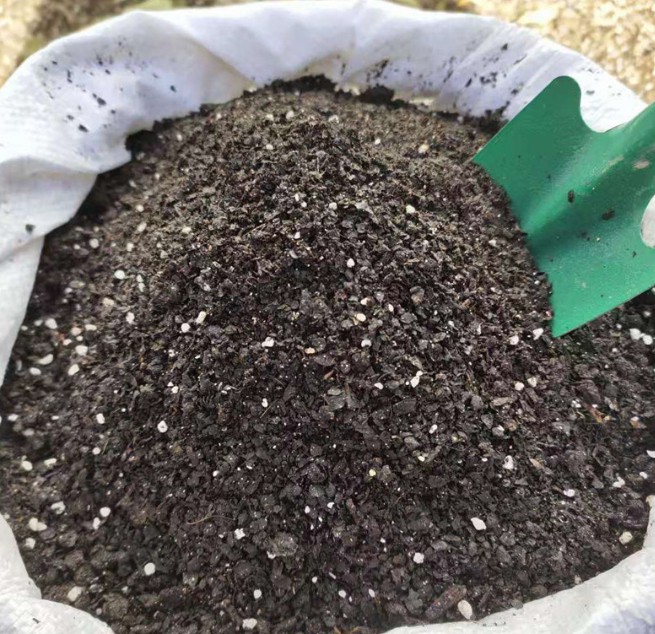
1. Seedlings, especially those raised without the use of chemical fertilizers and pesticides, are ideal candidates to plant in nutrient soil. It’s crucial to select those that thrive in your regional conditions; recommended options include coriander, dill, lupine, sweet peas, squash, cucumbers, tomatoes, pole beans, zucchini, Swiss chard, and snow peas/sugar snaps.
2. Vegetable gardens should be grouped in raised beds if possible, to provide a concentrated area where prospects are less likely to be tread upon. This approach also reduces the need for weeding, limits water waste, and targets compost and key nutrients to help the plants flourish.
3. Flowering plants tend to thrive when rooted in nutrient soil, helping to pollinate vegetables while demonstrating the symbiotic nature of organic gardening at its prime. Blossoms known to shine in this environment are black-eyed Susans, marigolds, salvias, sunflowers, zinnias, poppies, phlox, larkspur, and morning glories.
Bat droppings, which are known as guano.
Mulch
Blood Meal
Mushroom compost – If available
Bone Meal
Seaweed – If available
Compost
Soft rock phosphate
Fish Meal
Soybean meal
Manure
Worm castings, which are what worms excrete as they eat decomposed organic matter.
Aeration
Reliable nutrient availability is mediated by aerobic microbial activity. To provide adequate aeration, keep soil cool and free of excess moisture, and physically agitate the soil as you remove it from the sling, pile, or bag.
Exposure to Light
It’s best to store bagged products out of direct sunlight. The sunlight will degrade the woven polypropylene bags over time, as well as heating and drying out the product. If bags are stored outside, try to place them to the north side of a building, but be sure that they are not under a drip edge.
Temperature
Our soils and composts are a living media. The biota in our products survive freezing temperatures, even for prolonged periods. They become active again when the soil media reaches moderate temperatures.
Moisture
To help maintain proper moisture, please ensure that bags are adequately protected from sunlight and precipitation while stored outside. If you’re storing bags along the edge of a building, make sure that rain doesn’t drip off the roof and onto the bags, and be sure to tightly tie slings bags while not actively using them.
Time
Storage time is a function of temperature, exposure to light, moisture retention and other factors. For optimal performance, we generally recommend a maximum storage period of 9 months, depending on these conditions. However, your soil may still perform adequately for up to 12 months.
Packaging and Shipping
|
Packaging |
Waterproof bag |
|
Shipping |
Air and sea transport |
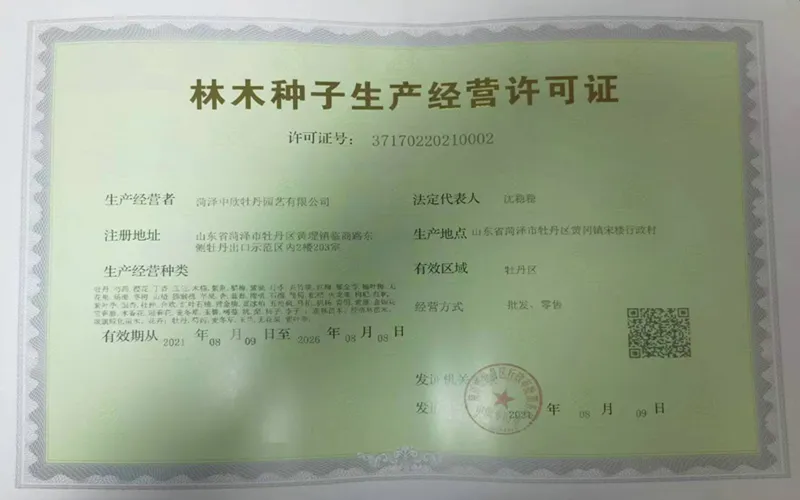
Our Certificate

FAQ
As one of the most professional nutrient soil manufacturers and suppliers in China, we're featured by quality products and good service. Please rest assured to wholesale nutrient soil at competitive price from our factory.
Universal Cow Dung Nutrient Soil, Vermi Nutrient Soil, nutrient soil-
![Cutting Fresh Peonies]() Cutting Fresh PeoniesProducts Description Peony, also known as the "Prime Minister of Flowers," possesses an inherently gentle andread more
Cutting Fresh PeoniesProducts Description Peony, also known as the "Prime Minister of Flowers," possesses an inherently gentle andread more -
![Peony Cut Flowers]() Peony Cut FlowersProducts Description Product Core Parameters Double-flowered Pink Peony (Sarah Bernhardt): Flower stem length 50-70cm,read more
Peony Cut FlowersProducts Description Product Core Parameters Double-flowered Pink Peony (Sarah Bernhardt): Flower stem length 50-70cm,read more -
![Tree Peony Juan Ye Hong]() Tree Peony Juan Ye HongModel: ZX-FW1-red8Root Length: 20cm-25cmFlower Color: RedCertificates: Certificate of Origin, Phytosanitaryread more
Tree Peony Juan Ye HongModel: ZX-FW1-red8Root Length: 20cm-25cmFlower Color: RedCertificates: Certificate of Origin, Phytosanitaryread more -
![Tree Peony Yu Hou Feng Guang]() Tree Peony Yu Hou Feng GuangRoot length: 20cm-25cmFlower color: Pinkish-blueCertificates: Certificate of Origin, Phytosanitary CertificateShippingread more
Tree Peony Yu Hou Feng GuangRoot length: 20cm-25cmFlower color: Pinkish-blueCertificates: Certificate of Origin, Phytosanitary CertificateShippingread more -
!['Ling Hua Chen Yu' Peony]() 'Ling Hua Chen Yu' PeonyFlower color: Pinkish-blueFlower diameter: 13 × 7 cmPlant height: Up to 90 cmCompound leaf size: Approximately 32 × 26read more
'Ling Hua Chen Yu' PeonyFlower color: Pinkish-blueFlower diameter: 13 × 7 cmPlant height: Up to 90 cmCompound leaf size: Approximately 32 × 26read more -
![Monsieur Jules Elie Peony]() Monsieur Jules Elie PeonyVariety Name: Fuji Propagation Method: DivisionSeedling Type: Bare-root seedlingsRoot System Specifications: Storageread more
Monsieur Jules Elie PeonyVariety Name: Fuji Propagation Method: DivisionSeedling Type: Bare-root seedlingsRoot System Specifications: Storageread more


